Why veneer edges crack during peeling
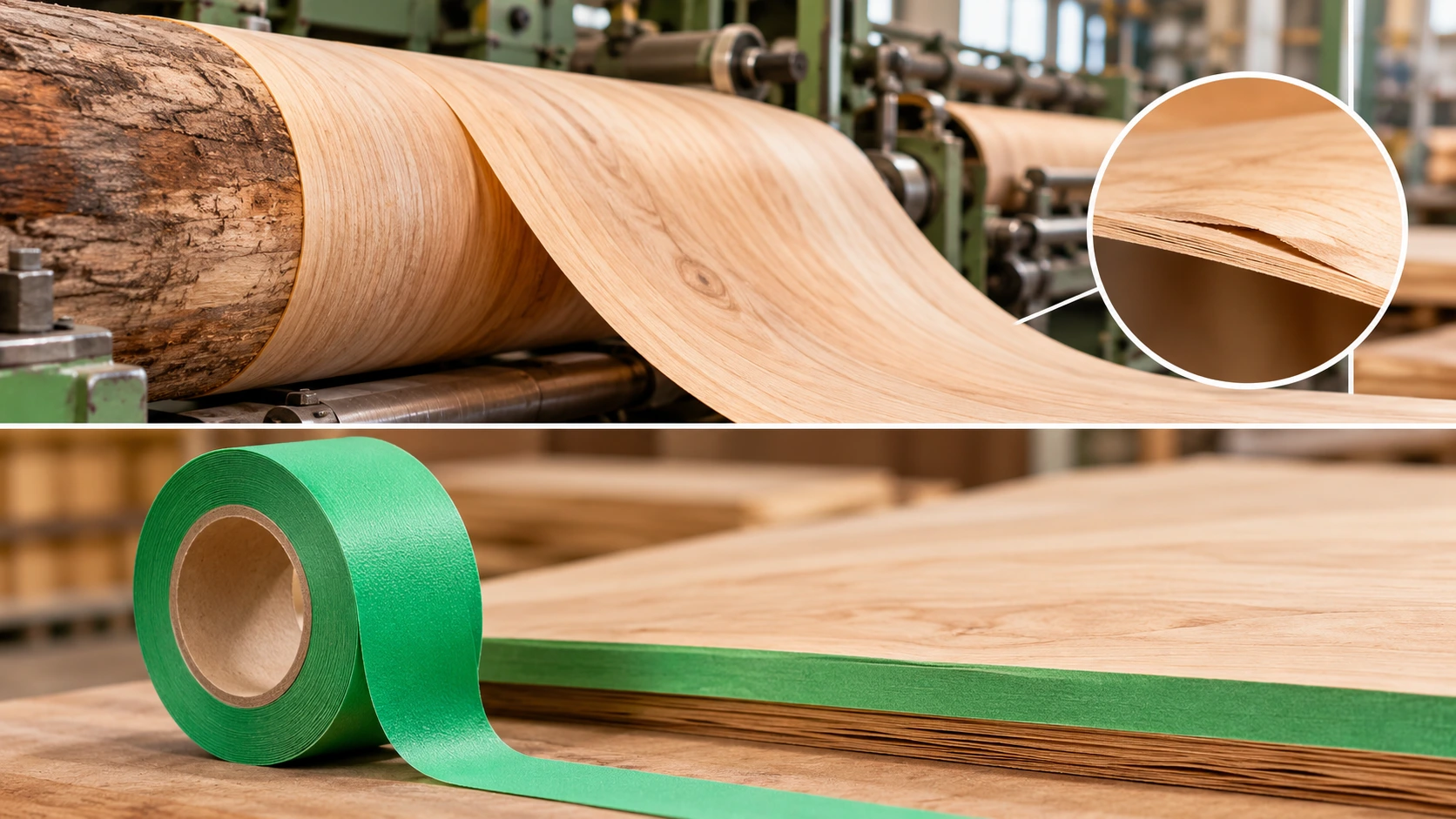
Veneer peeling looks straightforward from the outside: a log is prepared, mounted on a lathe and peeled into thin sheets. In practice, keeping those sheets continuous and usable takes careful control. One recurring problem is splitting along the edges of freshly peeled veneer. A small split can travel, reduce the usable width of the sheet and create extra work for the production team.
Wood is a natural material, so moisture, species, log condition, peeling settings and drying all influence how it behaves. When wet veneer is peeled, moisture can escape unevenly from the edges. This can contribute to splits or allow existing cracks to extend. The result may be more trimming, more repairs and more material that cannot be used as intended.
Where green veneer tape fits in
Green veneer tape is used during wet veneer peeling to help control edge splitting. Applied to the relevant edge areas, it helps hold the veneer together and can limit the progression of cracks as the material moves through the process. It is not a substitute for correct peeling and moisture management; it is one part of a process designed to protect usable veneer.
The right tape needs to work with the wood, the application method and the production conditions. A tape that performs well on one veneer type may not behave identically on another. That is why the veneer species, thickness, moisture condition and operating setup should be discussed before choosing a grade.
What should manufacturers look for in veneer peeling tape?
Bonding : The tape needs to adhere reliably to the veneer under the conditions in which it is applied. Surface condition and moisture level matter, so application trials are useful.
Tensile strength : Peeling is a continuous process. The tape must withstand the stresses placed on it during handling and production without breaking prematurely.
Performance through drying : Veneer commonly moves from peeling into a drying stage. The tape and adhesive need to be evaluated under the actual temperature and process conditions used by the manufacturer.
Consistent application : A tape that is difficult to apply or behaves inconsistently can slow the line. Operators should be able to apply it in a repeatable way.
Fit for veneer thickness : Thin veneer can be more vulnerable to splitting than thicker material. The tape grade should be selected for the actual application rather than chosen by price alone.
Why testing on your own veneer matters
Product specifications are useful, but they do not always tell the whole story. Veneer species, moisture, thickness, peeling speed and drying conditions vary between plants. A practical evaluation using the customer’s veneer can reveal whether the tape bonds as expected and remains in place through the relevant steps.
A useful trial should document the veneer type and thickness, moisture condition, tape grade, application method, peeling conditions and drying settings. Record the results, including any edge splits, tape breaks or handling issues. This gives production and purchasing teams a clearer basis for selecting a product and comparing alternatives.
Manufacturers should also consider the cost of lost material and downtime. If tape failure leads to repeated repairs or interruptions, the purchase price is only one part of the total cost. A calculation using the plant’s own production figures can help compare options more fairly.
Questions to discuss with your tape supplier
Before selecting a green veneer tape, be ready to share the veneer thickness and species, moisture condition at application, peeling speed, drying temperature and the problems you are trying to reduce. Ask whether the supplier can test your material and provide relevant technical information.
Do not rely on a broad statement such as “high strength” or “heat resistant” without understanding the test method and the conditions under which the claim applies. The most useful specification is one that relates to your process.
How WACO can help
WACO supplies veneer tape solutions for plywood and veneer manufacturing. Share your veneer thickness, process conditions and application challenge with the team to discuss a suitable grade and arrange an application evaluation.