Why decorative veneer needs a different kind of support
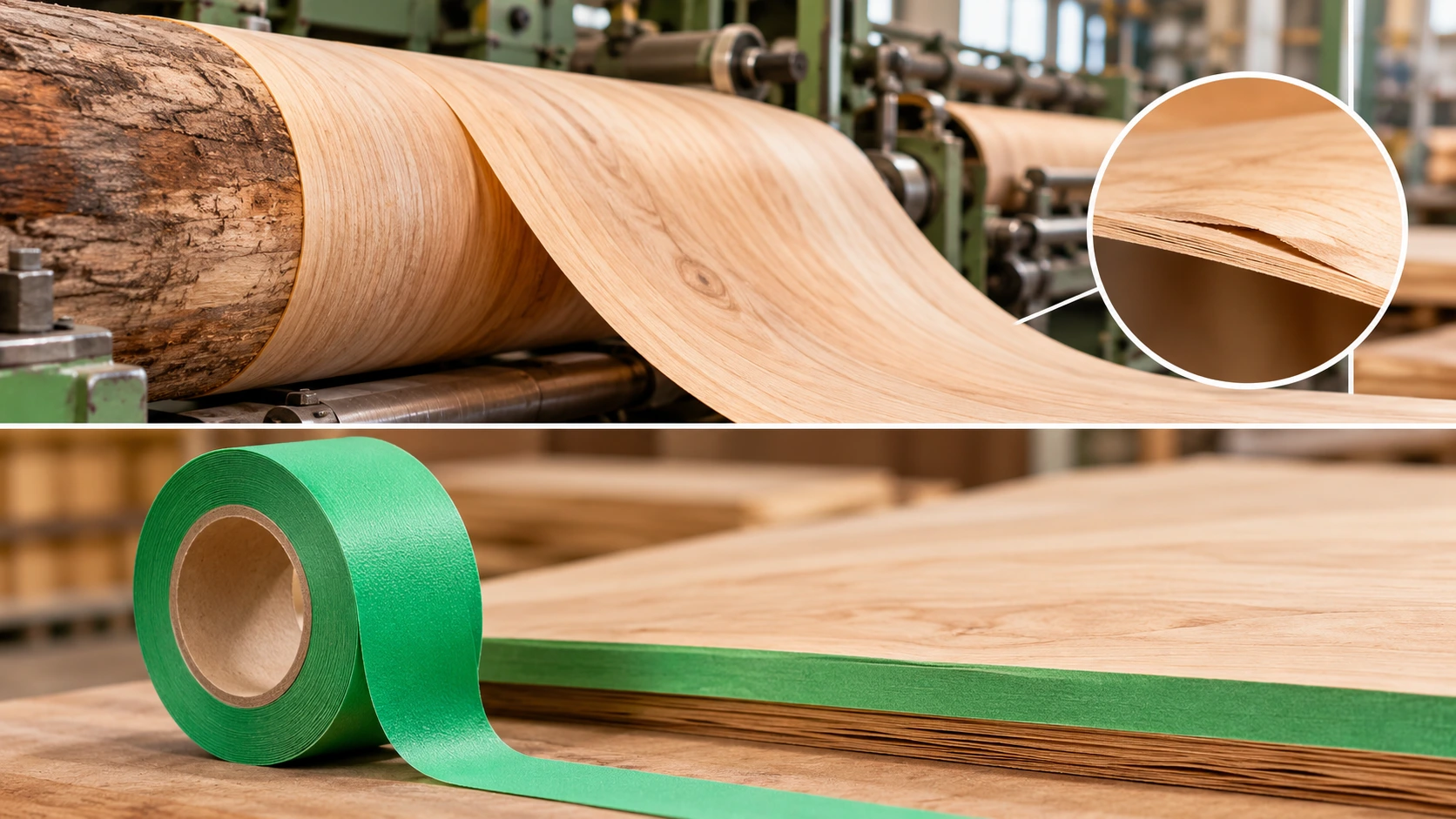
Decorative veneer brings the natural grain and character of wood to furniture, cabinetry, wall panels and interior surfaces. It is often thin, carefully selected and relatively delicate. That makes it attractive for design, but it can also make it difficult to handle when a project calls for curves or shaped surfaces.
A flat veneer panel is one thing. A veneer that must follow a curved cabinet front, a rounded furniture edge or a shaped automotive interior component faces a different challenge. Without suitable support, the veneer may split, crease or be difficult to position accurately.
What is fleece backing for veneer?
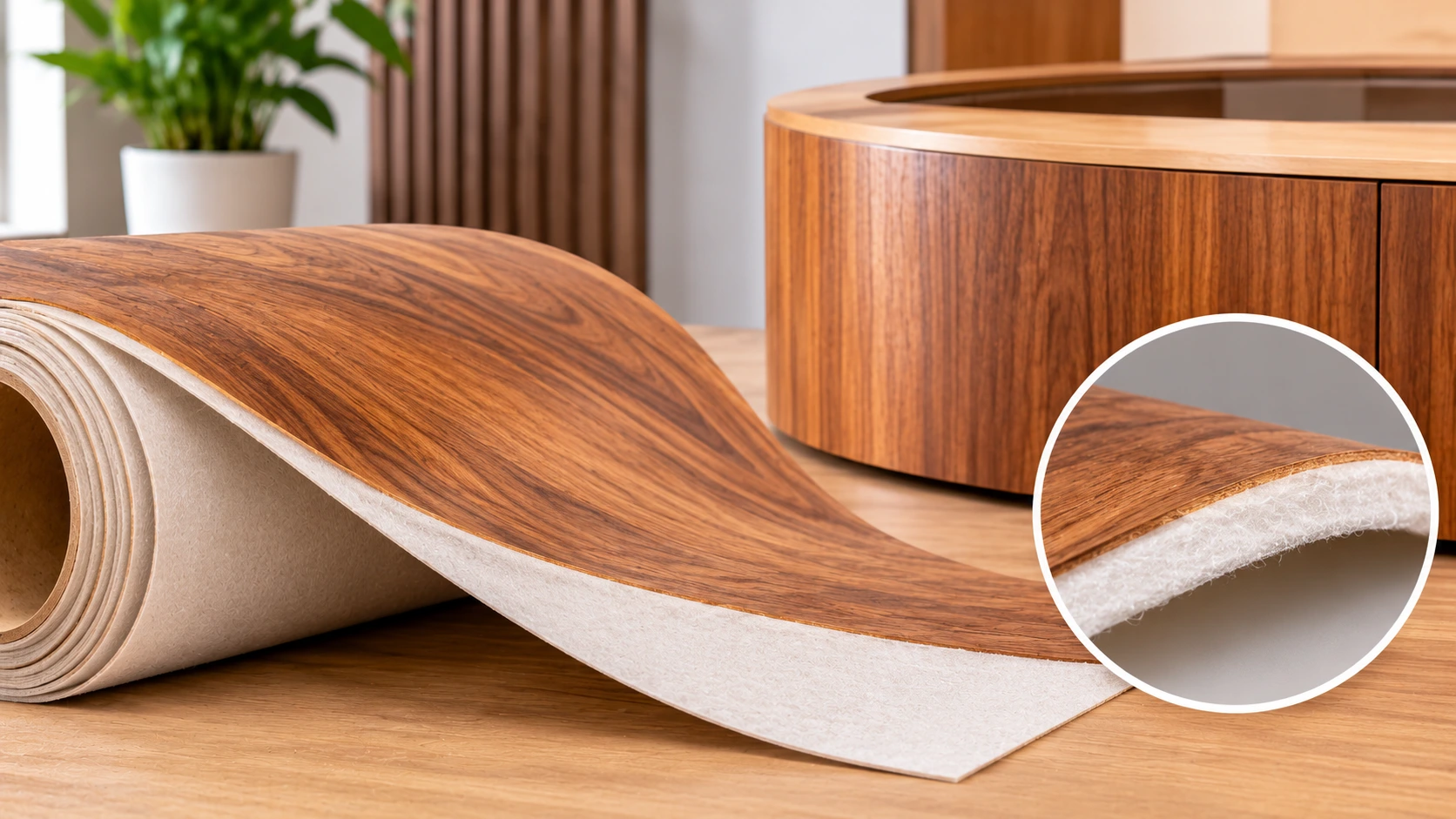
Fleece backing is a flexible backing material applied to the reverse side of decorative veneer. It helps support the veneer during handling and can make it more flexible for applications where the material needs to follow a curve or formed profile.
The exact result depends on the veneer, backing material, adhesive system and manufacturing process. Fleece backing should therefore be evaluated as part of the complete construction, not as a standalone material chosen without testing.
Where is fleece-backed veneer used?
Curved furniture : Rounded cabinet fronts, curved doors, reception desks and furniture components often require a surface material that can follow a shaped substrate.
Automotive interiors : Some vehicle interiors use decorative wood veneer on shaped dashboard or trim components. A suitable backing can help the veneer accommodate the intended form, subject to the component design and the automotive supplier’s requirements.
Luxury interiors : Decorative panels, feature walls and custom joinery may include shaped or curved elements where veneer flexibility is important.
Embossed and patterned designs : Certain designs involve forming, pressing or shaping veneer. The backing system needs to be compatible with the method and desired finish.
Can fleece backing replace a plywood backing?
In some constructions, decorative veneer is supported by a thin backing ply. A fleece-backed solution may reduce or remove the need for that additional layer, depending on the product design and how the finished component will be used.
That decision should not be made on flexibility alone. The manufacturer needs to consider the substrate, bonding method, finished thickness, strength requirements, machining, surface quality and the conditions the component will face in service. A sample trial is the sensible way to establish whether the backing can replace another layer in a particular application.
What should buyers evaluate before choosing a fleece backer?
Flexibility : Does the backed veneer follow the required radius without cracking or lifting?
Bond quality : Does the backing remain securely attached through forming, handling and subsequent processing?
Surface appearance : Does the backing affect the face veneer or create unwanted marks, unevenness or telegraphing?
Process compatibility : Can the material work with the customer’s adhesive, press, temperature and production cycle?
Handling : Is the backed veneer easier to transport, position and process without damage?
Supply and technical support : Can the supplier provide consistent material and help evaluate the construction for the intended application?
Why application trials matter
Two veneer projects can look similar but behave differently because of wood species, thickness, grain direction, curvature and substrate. A practical trial should use the veneer and process that the customer intends to run. Check flexibility, adhesion, surface finish and performance after forming or pressing.
For international buyers considering an alternative to an imported backing material, evaluate the proposed material against the current specification using agreed criteria. Claims about cost savings or equivalent performance should be based on that comparison, not assumed in advance.
How WACO can help
WACO has introduced a fleece-backer alternative for the Indian market. Contact the team to discuss your veneer type, forming requirements and sample-evaluation needs.